June 2026
Inspiring Outdoor Play
Communities of Professional Practice
By Barbara Alessandrini
As a Development Officer, I have the privilege of supporting early years educators in exploring innovative, meaningful approaches to practice. Last May, I had the opportunity to coordinate and participate in an Outdoor Community of Professional Practice for Early Childhood Educators across our county—an experience that was both professionally enriching and deeply inspiring.
A shared curiosity
Our journey began with an online gathering, where 18 educators representing 11 early years services came together with a shared curiosity about outdoor learning. This initial session, facilitated by Trisha MacLaughlin of Sligo Woodland School, set the tone for what would become a reflective and energising process. Trisha invited us to consider a simple yet powerful idea: that outdoor play is not an “extra,” but a fundamental part of childhood.
“
Playing in nature is a child’s birthright.
— A reflection shared during the session
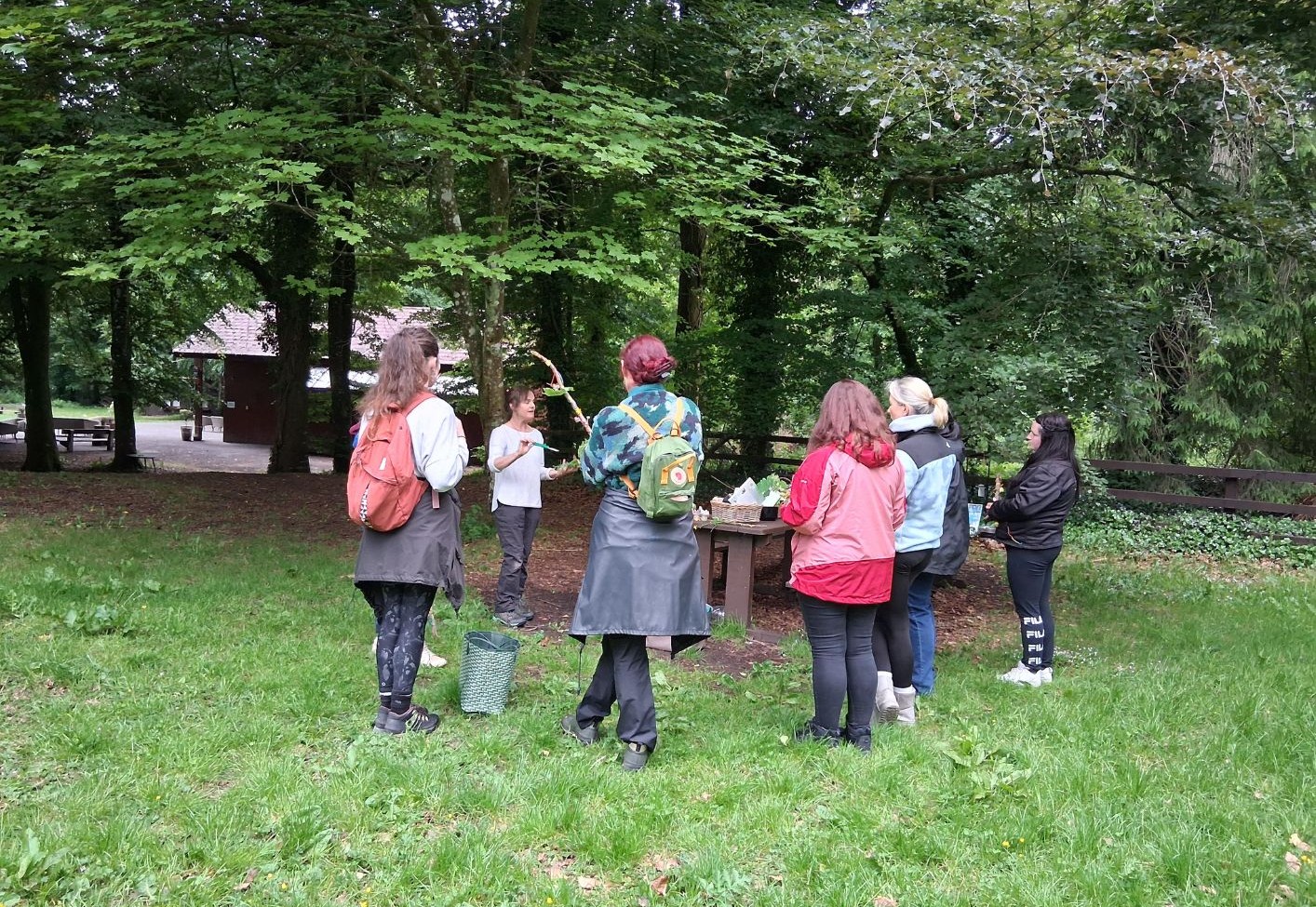 Eighteen educators from eleven services came together to explore the potential of outdoor learning.
Into Donadea Forest
Our second meeting brought this learning to life in the beautiful surroundings of Donadea Forest, County Kildare. Immersed in nature, we explored firsthand the rich potential of outdoor environments as spaces for holistic development. There was a palpable sense of connection—not only to the natural world, but also among the educators themselves. Being outdoors shifted the dynamic; conversations flowed more freely, ideas sparked organically, and reflection felt grounded and authentic.
Reframing risk
A key theme throughout our discussions was the concept of reframing risk. Outdoor environments naturally present challenges—uneven ground, climbing opportunities, changing weather—but rather than viewing these as barriers, we explored how they can support children’s confidence, resilience, and problem-solving skills. Risk, when thoughtfully managed, becomes an essential part of learning. It encourages children to test boundaries, make decisions, and develop a strong sense of self.
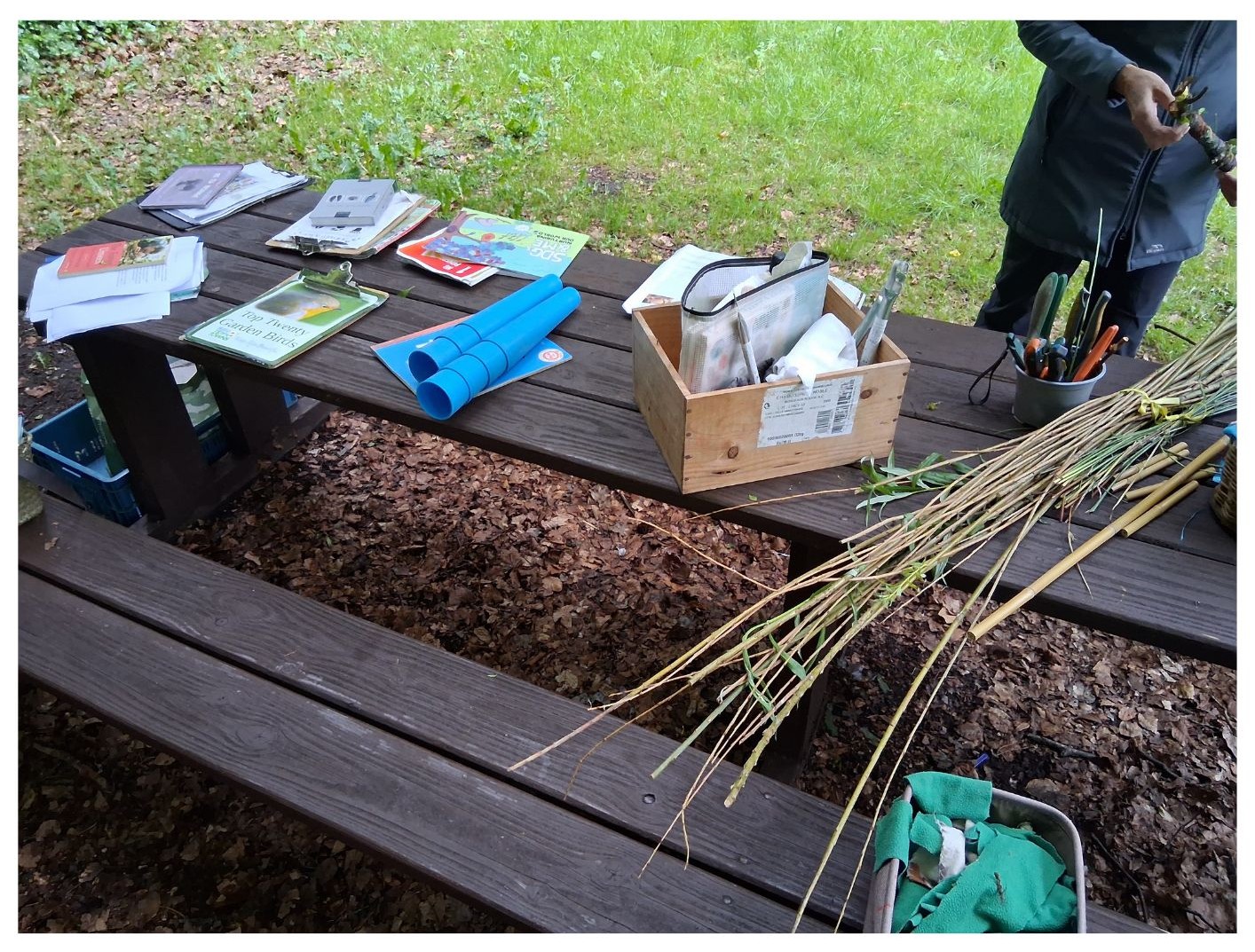 No expensive resources required—a few simple, natural materials are all the invitation children need.
The power of slow pedagogy
We also reflected on the importance of “slow pedagogy”—allowing children time and space to engage deeply with their environment. In a world that often feels rushed, outdoor play offers a chance to pause. Whether observing a worm, building with sticks, or simply listening to the wind in the trees, these moments foster curiosity, creativity, and emotional wellbeing. As highlighted in national guidance, young children learn best through active, hands-on, and inquiry-based experiences. The outdoors provides an ideal setting for this kind of learning.
Nature is the resource
Trisha shared a wealth of practical ideas to support educators in getting started or building confidence in outdoor practice. From creating “special places” for children to return to, to simple activities like nature scavenger hunts, clay printing with leaves, or building bug hotels, the emphasis was on using what is readily available in the environment. We were reminded that outdoor learning does not require expensive resources—nature itself is the resource.
The role of the educator
Another powerful takeaway was the role of the educator. Our values, attitudes, and willingness to embrace the outdoors are pivotal. When educators feel confident and inspired, this translates directly into richer experiences for children. The Community of Practice model allowed for shared reflection, where participants could exchange ideas, discuss challenges, and support one another in developing their practice.
“
What stood out most was the sense of possibility. Outdoor learning is not about perfection—it is about starting where you are, with what you have.
— Barbara Alessandrini
It is about stepping outside, observing, and being open to what unfolds. The benefits are far-reaching: improved physical health, enhanced emotional resilience, stronger connections to nature, and a deeper sense of belonging.
As we concluded our time together in Donadea Forest, there was a shared commitment among participants to bring these experiences back to their settings. The hope is that this Community of Practice will continue to grow, supporting more educators to embrace outdoor play as an integral part of early childhood education.
Take the first step
To any educator considering this journey, I would offer this encouragement: take the first step. Go outside with your group, allow time for exploration, and trust in the process. The outdoors holds endless opportunities for learning, discovery, and joy—for children and educators alike.
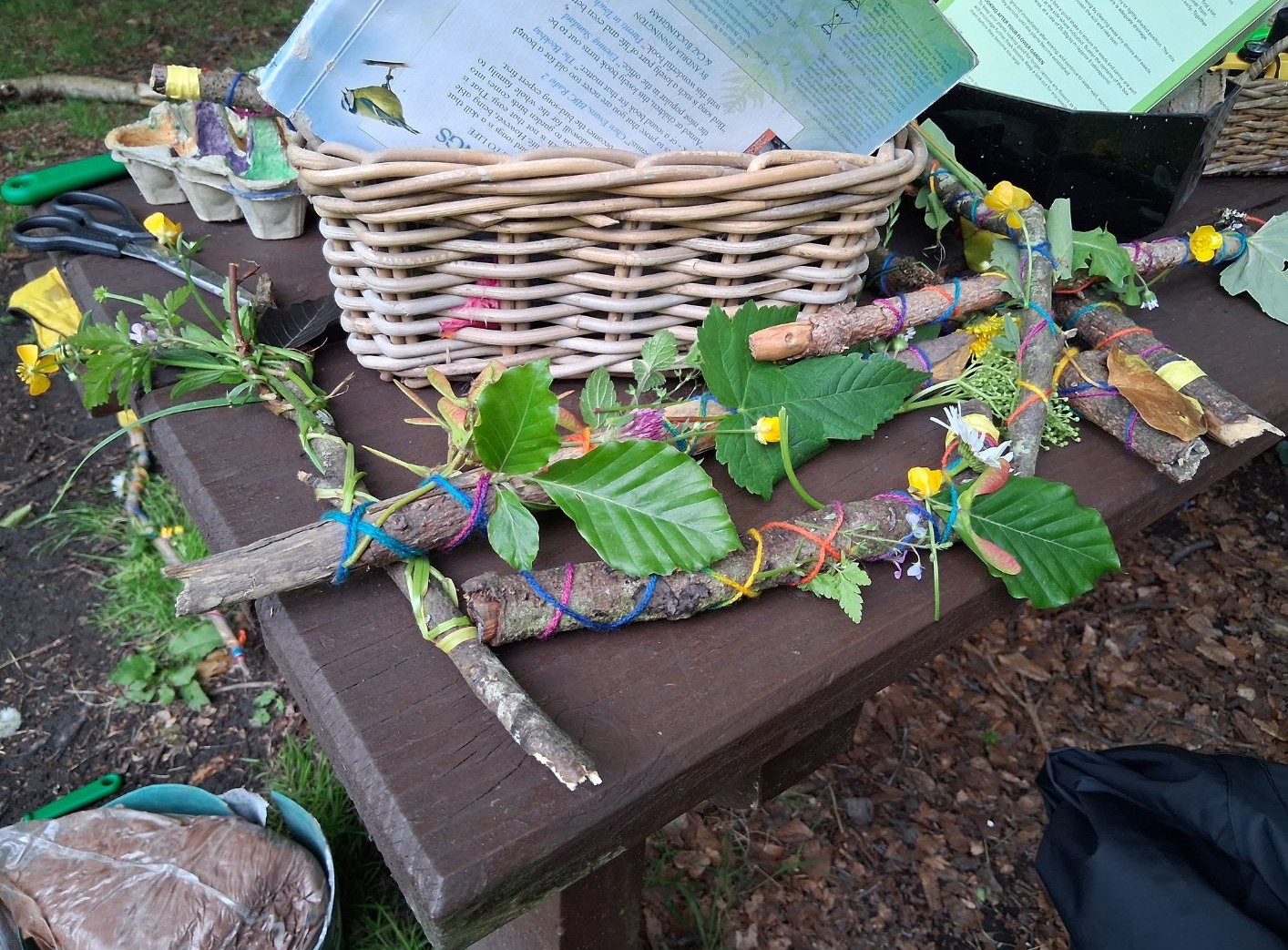 Leaves, sticks and wildflowers become the makings of discovery and storytelling.
This Community of Professional Practice continues to grow across County Kildare, supporting more educators to embrace outdoor play as an integral part of early childhood education. The outdoors holds endless opportunities for learning, discovery, and joy—for children and educators alike.
If you would like to be part of the next Community of Professional Practice, please contact Barbara via email to barbara.alessandrini@kccc.ie or call 086 8248373.